ARM assembly language is a low-level, RISC-based programming language used to communicate directly with ARM processors. It is widely used for embedded systems, mobile devices (iOS/Android), and IoT hardware. Because it interacts closely with hardware, it enables highly optimized, fast, and memory-efficient software.
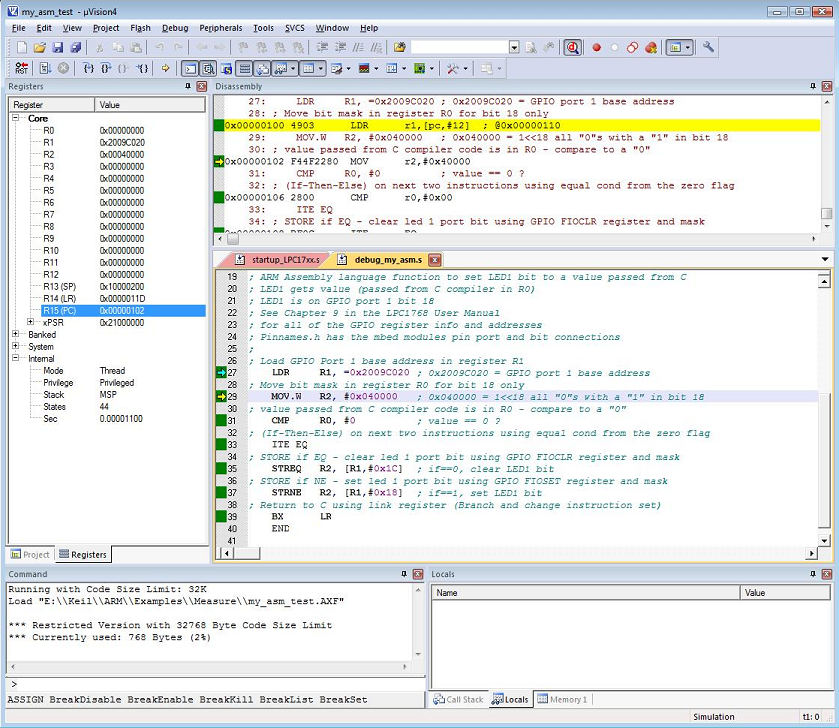
| The screen shows the program being debugged using the Keil tools, which are the complete software development environment for a range of ARM Cortex-M devices. Note the register values on the left and the highlighting of the current instruction in the code window. |
|
The fundamental difference between ARM assembly and MASM assembly is that ARM is a hardware architecture specification (RISC) while MASM is a software tool (an assembler) designed specifically to compile assembly code for Intel/AMD x86 and x64 hardware architectures (CISC). They feature completely different instruction sets, design philosophies, and target ecosystems.
|
I think I’ve discovered the secret of life — you just hang around until you get used to it. ― Charles Schultz |